The Kubernetes desktop engineers actually want to open.
Fast, open source, no login. Manage every cluster, troubleshoot with AI and runs a deterministic diagnosis — from one clean app.
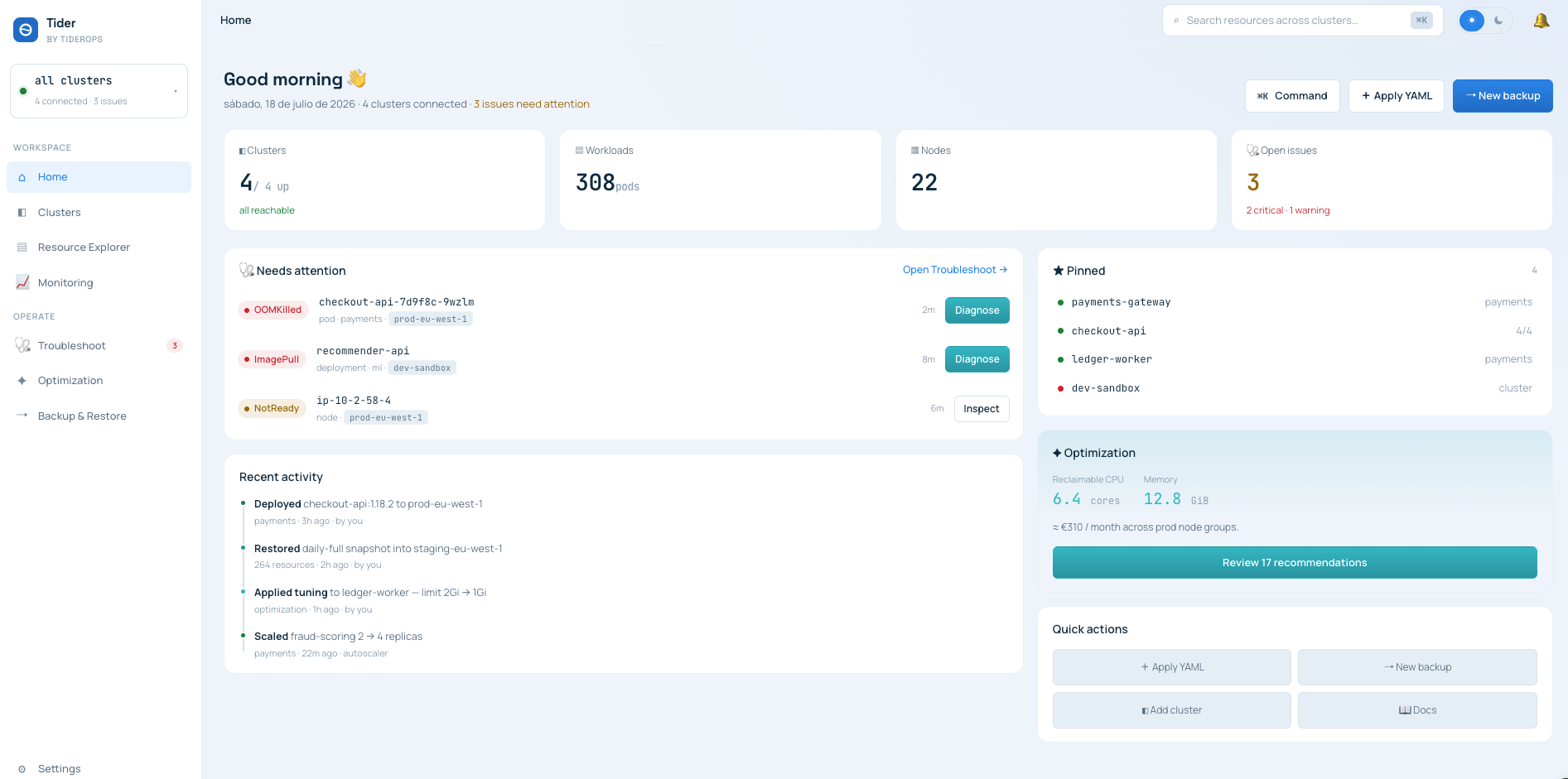
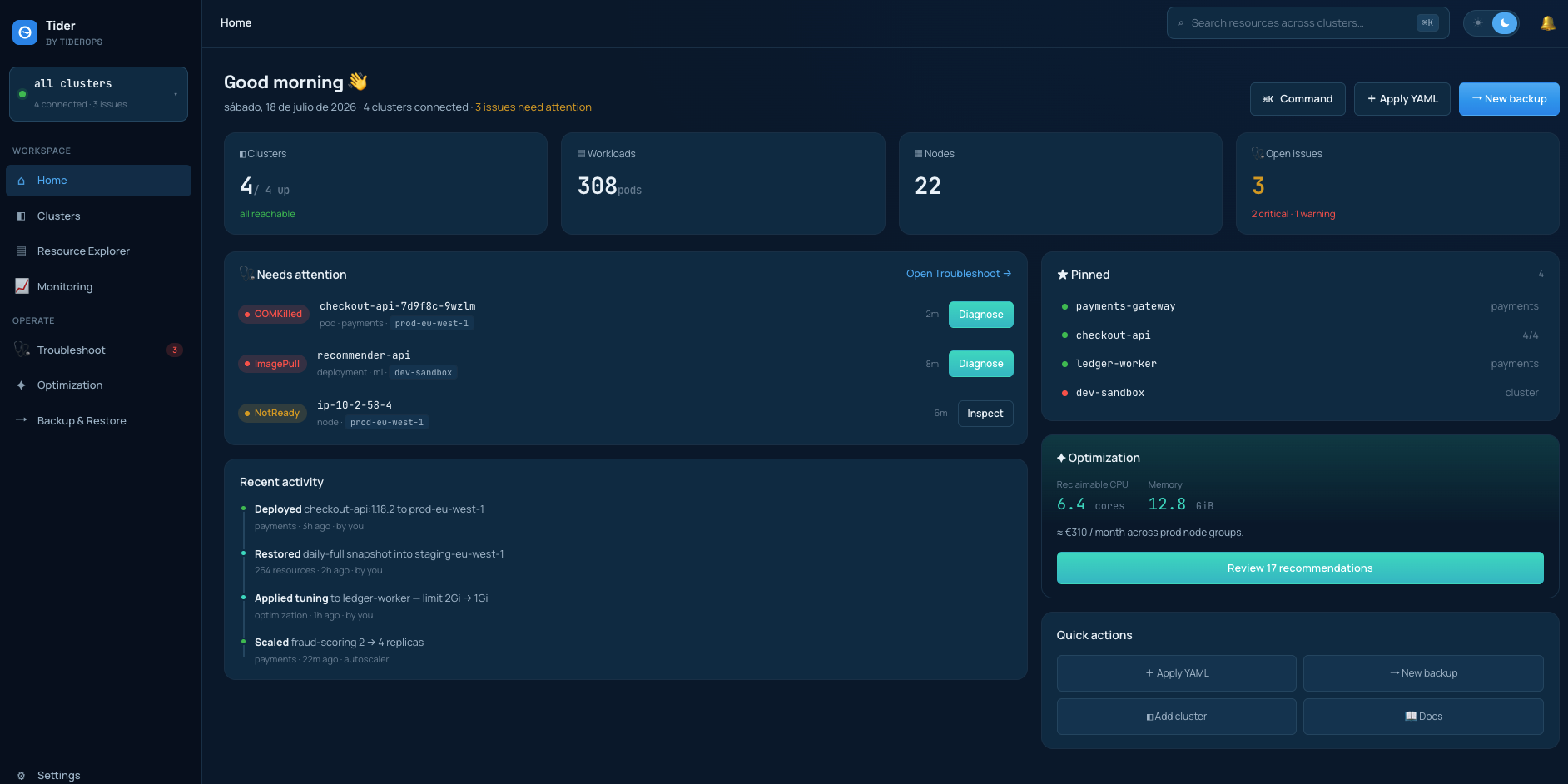
Fleet state and diagnosis entry points — one window.
Connect with your kubeconfig
Tider uses your existing kubeconfig and identity chain. No TiderOps account, no separate credentials — every context is live in seconds.
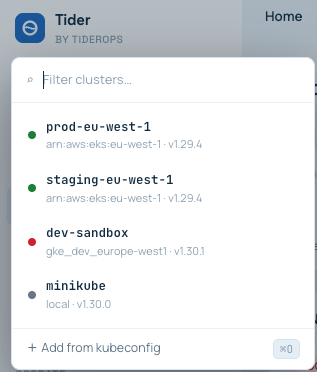
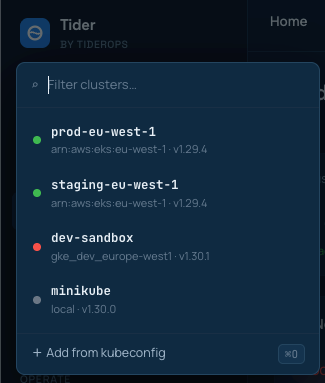
Multi-cluster context switching
Select clusters and namespaces fast, switch contexts without losing your place, and keep prod and staging visually distinct.
Deterministic diagnosis
A rule engine covers the top failure signatures — CrashLoopBackOff, ImagePullBackOff, OOMKilled, Pending/Unschedulable, probe failures, rollout deadlines — and returns findings with severity and confidence. No LLM required.
Evidence snapshot
One bounded bundle per diagnosis: workload status, owner chain, container states, recent events, rollout state and available metrics. Every finding references the exact evidence it used.
Change attribution
A change timeline built from Kubernetes rollout revisions and Argo CD metadata proposes the candidate change with a confidence level — probable, not proclaimed.
Incident history & reports
Diagnoses are stored locally and export to Markdown or JSON with evidence and provenance attached — ready for the incident channel or the postmortem.
Read-only & private by design
No patch, delete, exec or apply. No raw cluster data leaves your machine by default; telemetry is opt-in and allowlisted; builds are signed with an SBOM.
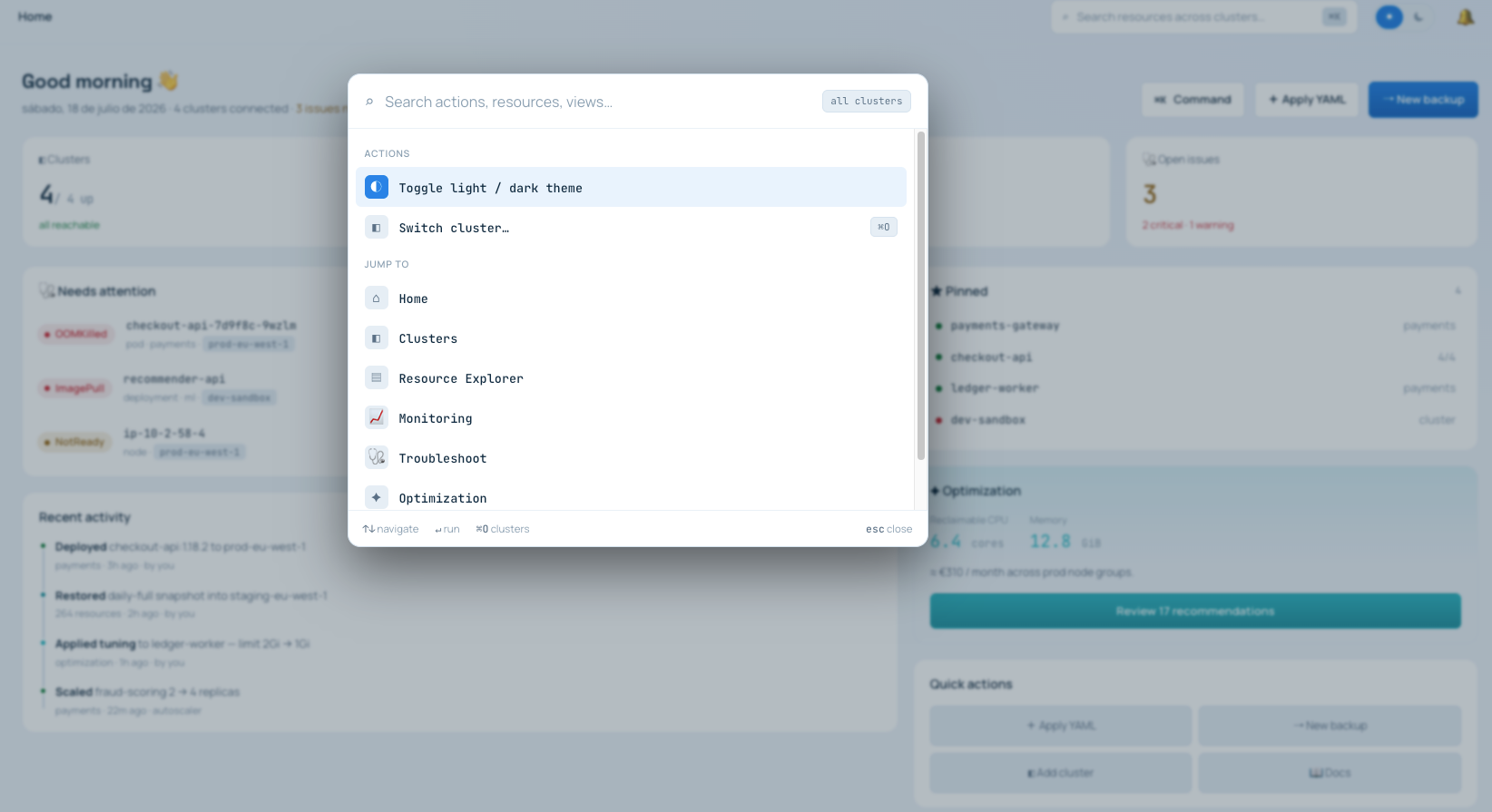
Built for
Teams with recurring workload failures, a few to a few dozen clusters, and a GitOps delivery flow — where diagnosis still depends on the most senior engineer in the room.
A published support matrix
Every release documents the Kubernetes and client-go versions it was tested against. Tested today:
Expanding next — outside the matrix, Tider degrades gracefully and reports the evidence it couldn't collect: